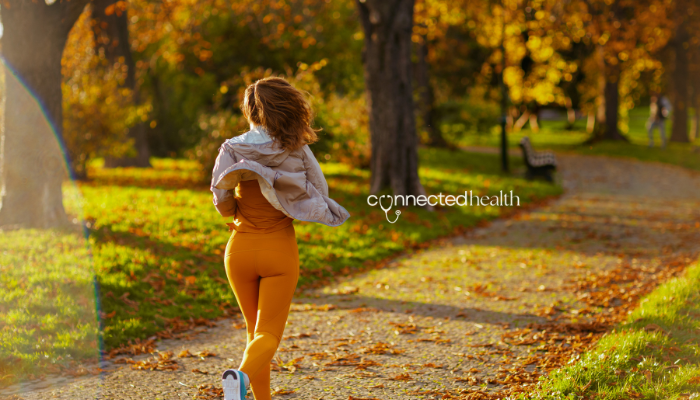
Don't Let the Cooler Weather Keep You Inside: The Benefits of Getting Outdoors This Fall
As the temperatures drop and the days get shorter, it's tempting to spend more time indoors. But fall is actually one of the best seasons to get outside, move your body, and enjoy some fresh air.
You don't need an intense workout or a complicated fitness routine to experience the benefits. A brisk morning walk, a few stretches on your back deck, or an afternoon spent exploring a local trail can all make a positive difference in how you feel.
At Connected Health, we encourage patients to find simple, realistic ways to stay active throughout the year. And just because the weather is getting colder doesn't mean your healthy habits need to go into hibernation!
Why Getting Outside Is Good for You
Spending time outdoors offers benefits that go beyond physical fitness. Even a short amount of time outside can help support your overall health.
1. Boost Your Mood
Fresh air, natural surroundings, and physical activity can help reduce stress and improve your mood. With the busyness of everyday life, stepping outside can be a simple way to reset and recharge.
2. Support Better Sleep
Exposure to natural daylight, especially in the morning, helps regulate your body's internal clock. Getting outside early in the day can support a healthy sleep-wake cycle and may help you sleep better at night.
3. Keep Your Heart Healthy
Walking, hiking, and other moderate physical activities help support cardiovascular health, circulation, and endurance. Even short walks throughout the day add up!
4. Maintain Energy and Focus
Feeling sluggish as the days get shorter? A little movement and fresh air can help improve alertness and concentration. Sometimes, a 10-minute walk is just what you need to get through that afternoon slump.
5. Stay Consistent with Movement
One of the biggest benefits of outdoor activity is that it doesn't have to feel like exercise. Walking your dog, raking leaves, or playing outside with your children or grandchildren all count as movement. The key is finding activities you enjoy and can stick with.
Simple Ways to Stay Active This Fall
You don't need a gym membership, special equipment, or an hour of free time to make outdoor movement part of your routine. Here are a few easy ideas to try:
- Start your morning with a brisk walk. Before the day gets busy, head outside for a 10–20 minute walk. It's a great way to wake up your body, enjoy some natural light, and start your day on a positive note.
- Try yoga on your back deck or patio. Grab a mat, put on a comfortable layer, and spend 10 minutes stretching, practicing balance, or moving through a few gentle yoga poses.
- Take an afternoon movement break. Instead of reaching for another cup of coffee, step outside for a quick walk around the block.
- Explore a local park or trail. Fall foliage makes this a beautiful time of year to get out and explore. Invite a friend or family member to join you!
- Make yardwork count. Raking leaves, gardening, and preparing your outdoor space for winter can be great ways to stay active. Just remember to use proper lifting techniques and take breaks.
- Get the family involved. Go for an after-dinner walk, toss a football around, or take the kids outside to play. Movement is even better when it's something you can enjoy together.
Remember: You don't have to do everything at once. Start with 10 minutes a day and gradually build from there. Consistency matters more than intensity.
Don't Forget to Stretch!
Cooler temperatures can make it especially important to ease into physical activity rather than jumping right into a workout.
Before heading out for a walk or another outdoor activity, take a few minutes to warm up your muscles with gentle movement.
Try these simple movements:
- Shoulder rolls: Roll your shoulders forward and backward to release tension.
- Arm circles: Make small, controlled circles to warm up your upper body.
- Marching in place: Spend 30–60 seconds gently marching to increase circulation.
- Leg swings: Hold onto a sturdy surface and gently swing each leg forward and backward.
- Ankle circles: Rotate each ankle to help prepare your feet and ankles for walking.
Start your activity at a comfortable pace and gradually increase your intensity. Save longer, static stretches—like calf, hamstring, and quadriceps stretches—for after your muscles are warmed up.
Stay Safe as the Days Get Shorter
Fall brings beautiful scenery and comfortable exercise temperatures, but shorter days and changing weather also mean taking a few extra precautions.
Make Yourself Visible
If you're walking, running, or biking in the early morning or evening, wear bright, high-visibility clothing. Reflective jackets, vests, and accessories can help drivers see you in low-light conditions. Consider carrying a flashlight or wearing a headlamp when it's dark.
Stay Aware of Your Surroundings
As tempting as it is to listen to music or a podcast, consider leaving your headphones at home when walking or running after dark. Being able to hear approaching vehicles, cyclists, animals, and other activity around you is important for your safety. If you do listen to something, keep the volume low enough to remain aware of your surroundings.
Choose Well-Lit Routes
Stick to familiar, well-lit sidewalks and paths, especially when exercising before sunrise or after sunset. Whenever possible, walk with a friend or let someone know your planned route.
Dress in Layers
Fall temperatures can change quickly, particularly in the morning and evening. Dress in breathable layers that you can remove as your body warms up. Don't forget comfortable, supportive footwear with good traction, especially when leaves or wet pavement make surfaces slippery.
Watch Your Footing
Fallen leaves can hide uneven pavement, holes, and other obstacles. Wet leaves can also be surprisingly slippery, so pay attention to where you're stepping.
Stay Hydrated
Just because you're not sweating as much as you would on a hot summer day doesn't mean hydration is any less important. Drink water before and after outdoor activities, and bring some along for longer walks or hikes.
A Little Movement Goes a Long Way
As we transition into the colder months, it's easy to fall out of our usual routines. But staying active doesn't have to mean committing to a major fitness goal or spending hours at the gym.
Sometimes, it's as simple as putting on a jacket, stepping outside, and taking a walk.
At Connected Health, we believe that small, sustainable habits play an important role in long-term health. Our approach to personalized, proactive, and preventative primary care includes helping patients find realistic ways to incorporate movement into their everyday lives.
So before you settle in for another evening indoors, consider stepping outside—even if it's just for 10 minutes. Your body and mind may thank you!