Fall Health Check-In: Seasonal Health Q&A with Our Medical Providers
Fall brings a lot to look forward to—cooler temperatures, changing leaves, football season, and getting back into familiar routines. But it also brings some changes that can affect our health.
Back-to-school season, for example, often means more germs circulating throughout our communities—and you don't have to have school-aged children to be exposed. You may have grandchildren heading back to school, work in education or healthcare, visit busy medical offices, shop in crowded stores, travel, or simply spend time around more people as everyone settles back into fall routines.
At the same time, daylight hours are getting shorter, temperatures are dropping, and cold and flu season is approaching. It makes fall a great time to check in on some of the everyday habits that can help support your health through the months ahead.
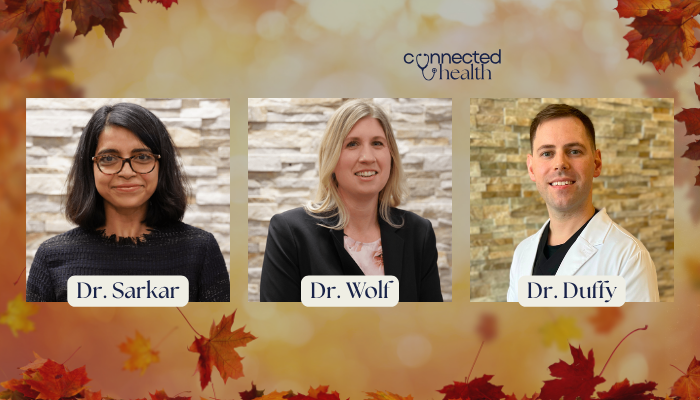
We asked Connected Health physicians Dr. Chaitali Sarkar, Dr. Michael Duffy, and Dr. Suzanne Wolf to share some of their favorite fall health habits and the preventative care they encourage patients to think about this time of year.
Q: What is one of your favorite ways to stay healthy during the fall?
Dr. Chaitali Sarkar, MD
Dr. Sarkar encourages patients to think about several areas of their health as the seasons change, including Vitamin D, immune health, exercise, and mood.
“It’s very important to stay up on good Vitamin D supplementation for mood and seasonal affective disorder (SAD)—keep levels around 50–60 unless your doctor recommends otherwise. I also suggest a preventative regimen for upper respiratory infections, like elderberry or Vitamin C/D/Zinc supplements. And even though it’s hard to be outside, try to keep up a consistent workout routine. Also… I love burning candles during the cooler months for a little extra coziness!”
As we get less sunlight during the fall and winter, it's worth talking with your healthcare provider about Vitamin D—particularly if you have previously had low levels. Your provider can help determine whether testing or supplementation makes sense for you and what level is appropriate based on your individual health.
Exercise is another habit that's easy to let slide as the weather gets colder. Whether you continue exercising outdoors or move your routine inside, finding something you can stick with consistently can make a difference for both physical and mental health.
And we agree with Dr. Sarkar: sometimes embracing the cozy parts of the season is good for us, too!
Dr. Michael Duffy, DO
For Dr. Duffy, fall is an opportunity to reset the healthy routines you've established.
“Fall is a great time to reset routines and build healthy habits. I encourage patients to remain active outside. Brisk walks, hiking, or cycling can be enjoyable in the fall. The shorter days provide a good opportunity to work on sleep hygiene but can also affect mental health in a negative way, so it’s important to prioritize mental health by practicing mindfulness or journaling. Fall is also the perfect time to get back in the kitchen and make home-cooked meals.”
Rather than waiting until January to think about healthy habits, use the change of season as a natural reset. Small, sustainable routines can add up over the course of the season.
Dr. Suzanne Wolf, DO
Dr. Wolf's favorite fall habit is wonderfully simple: get outside.
“I love walks and hikes in the fall. Getting outside is so beneficial for our health!”
You don't need an elaborate exercise program to stay active. Walking is an accessible way to incorporate more movement into your day, and fall weather can make it one of the best times of year to do it.
Try taking a walk after dinner, exploring a local trail on the weekend, or meeting a friend for a walk instead of sitting down for coffee. The goal isn't perfection—it's finding opportunities to keep moving.
Q: What preventative health check-ins should patients think about this fall?
Fall is also a good time to make sure preventative care hasn't gotten lost in the shuffle of summer vacations, travel, and changing schedules.
Dr. Sarkar: Stay Connected to Your Healthcare Provider
“Stay in touch with your doctor or provider!”
Preventative healthcare isn't limited to an annual physical.
If something has changed with your health, you're overdue for recommended screenings, you have questions about medications, or you simply haven't checked in for a while, fall can be a good opportunity to reconnect with your medical team.
Dr. Duffy: Review Your Vaccinations
“It’s important to see your healthcare provider for flu, COVID, and any other age-appropriate vaccines.”
Vaccine recommendations aren't identical for every person. Age, medical history, previous vaccinations, pregnancy status, risk factors, and other considerations can affect what's recommended and when.
Rather than trying to figure out your entire vaccination schedule yourself, ask your healthcare provider which seasonal and age-appropriate vaccines you should consider.
Dr. Wolf: Don't Forget Recommended Screenings
“October is Breast Cancer Awareness Month, so make sure you're up to date with your mammogram. It's also the perfect time to get your seasonal vaccines to stay healthy all winter long.”
Seasonal reminders can be helpful prompts to check whether you're current on preventative screenings.
With Breast Cancer Awareness Month coming up in October, now is a great time to check whether you're up to date on your mammogram and discuss your appropriate screening schedule with your healthcare provider.
And the reminder goes beyond mammograms. Depending on your age, sex, medical history, and risk factors, there may be other screenings or routine health checks that should be on your radar this fall.
More Germs Are Circulating. What Can You Do?
Once schools are back in session and people return to busier fall schedules, respiratory illnesses can begin circulating more widely.
Even if there isn't a backpack or school bus anywhere in your daily routine, you're still part of the larger community. Children bring illnesses home to parents and grandparents. Educators interact with students all day. Healthcare workers see patients. Coworkers share offices. And all of us encounter other people at grocery stores, gyms, restaurants, medical offices, airports, community events, and countless other places.
It's a good reminder to return to the basics.
Wash your hands regularly, avoid touching your face with unwashed hands, cover coughs and sneezes, and give yourself time to rest when you're sick. If you develop symptoms or aren't sure whether you should be around others, reach out to your healthcare provider for guidance.
It's also a good time to make sure the habits that support your overall health haven't slipped: consistent sleep, regular movement, balanced nutrition, adequate hydration, and managing stress.
Your Fall Health Checklist
As you settle into the season, consider asking yourself:
- Am I up to date on the vaccines recommended for me?
- Am I due for any preventative screenings?
- Have I maintained a consistent exercise routine as the weather changes?
- How has my sleep been?
- Have I noticed changes in my mood or energy as daylight decreases?
- Am I eating balanced meals regularly?
- Is there anything I've been meaning to discuss with my healthcare provider?
You don't need to overhaul everything at once. Sometimes a new season is simply a useful reminder to check in, make a few adjustments, and address the things you've been putting off.
Stay Proactive This Fall
At Connected Health, we believe some of the most valuable healthcare happens before something becomes a bigger problem.
Our approach to Personalized, Proactive, Preventative Primary Care gives patients the opportunity to stay connected with their medical team, ask questions as they arise, keep track of preventative care, and make health decisions based on their individual needs.
As Drs. Sarkar, Duffy, and Wolf remind us, staying healthy this fall doesn't have to be complicated. Keep moving, pay attention to sleep and mental health, stay current with preventative care, talk with your provider about seasonal vaccines and supplements that may be appropriate for you—and don't underestimate the value of getting outside to enjoy a beautiful fall day.
Have a question about your fall health or preventative care? Connected Health patients can reach out to their medical team through Spruce.
%20(1).png)

.png)

%20(17).png)


